- HR Insights Today
- Posts
- 🧠 34% of heavy AI users say mental overload is pushing them to quit
🧠 34% of heavy AI users say mental overload is pushing them to quit
Inside: Coderpad’s 2026 State of Tech Hiring Report

Sophia Bennett
March 17, 2026

Presented by
Hey HR Pros!
AI is supposed to make work easier. In many cases, it is doing the opposite. As employees juggle multiple AI tools and oversee increasingly complex systems, many are hitting their cognitive limits. Researchers are now calling this phenomenon “AI brain fry,” a form of mental fatigue caused by intensive AI oversight.
In this edition, we are also featuring Coderpad’s 2026 State of Tech Hiring Report. Get access to your copy!
Upcoming In This Issue:
🧠 34% of heavy AI users say mental overload is pushing them to quit
📊 52% of HR teams feel unprepared to implement HR technology
🙋♀️ Women lead employee engagement by 6 points, but burnout remains higher
🧑💼 46% of U.S. adults are unmarried as the solo economy reshapes workplace benefits

In Coderpad’s 2026 State of Tech Hiring Report, 650+ developers and hiring leaders share how AI is changing technical interviews, skill expectations, and candidate confidence.
See what’s actually shifting, what’s not, and how leading teams are adapting their hiring strategies for an AI-augmented world.
Access the research and move forward with clarity.
📰 Latest in HR News
401(k) account balances increase by double digits (again)
Is Meta planning layoffs in 2026? The rumors say AI remains a top priority
The EEOC’s new DEI enforcement posture: What employers need to know (and do now)
Global hiring is up. But not everywhere, and not equally
🧠 34% of heavy AI users say mental overload is pushing them to quit
Recent research examining nearly 1,500 full time workers found that intensive AI oversight can push employees past their mental limits, creating what researchers call “AI brain fry.”
For HR teams guiding AI adoption, the challenge is not just enabling productivity but protecting cognitive capacity.
How do you think AI is impacting cognitive workload in your organization? |
Key insights
🧠 14% of AI users report “brain fry”: Employees described mental fog, headaches, and slowed decisions after intensive oversight of AI tools.
📊 Oversight drives cognitive strain: Workers managing AI systems reported 14% more mental effort and 12% higher mental fatigue.
⚠️ Too many tools reduce productivity: Productivity rises with two to three AI tools but drops once employees juggle four or more.
📉 Cognitive overload carries business costs: Employees experiencing AI brain fry reported 39% more major errors and significantly higher intent to quit.
Read the full article: https://hbr.org/2026/03/when-using-ai-leads-to-brain-fry
📊 52% of HR teams feel unprepared to implement HR technology
Recent survey data from more than 4,500 HR professionals highlights a clear gap between the growing importance of HR tech and the readiness of HR teams to implement it effectively.
The real opportunity for HR leaders now is building the capability to move from experimentation to strategic implementation across systems, governance, and workforce processes.
How prepared is your HR team to implement AI and new HR technologies? |
Key insights
🤖 HR tech implementation is the biggest capability gap: 52% of HR professionals say their teams feel least prepared to implement new HR technologies.
📉 Only 13% feel highly prepared for HR technology adoption: indicating a major readiness gap as AI and digital tools accelerate across workplaces.
🧠 AI is already widely used in HR workflows: 71% of HR professionals report using AI regularly for tasks like communications, research, and summaries.
📚 Training remains limited: more than half of HR professionals say their organizations offer no formal AI training for HR teams.
Read the full report: https://www.hrci.org/docs/default-source/pdf-documents/hrci-2026-state-of-hr-report.pdf
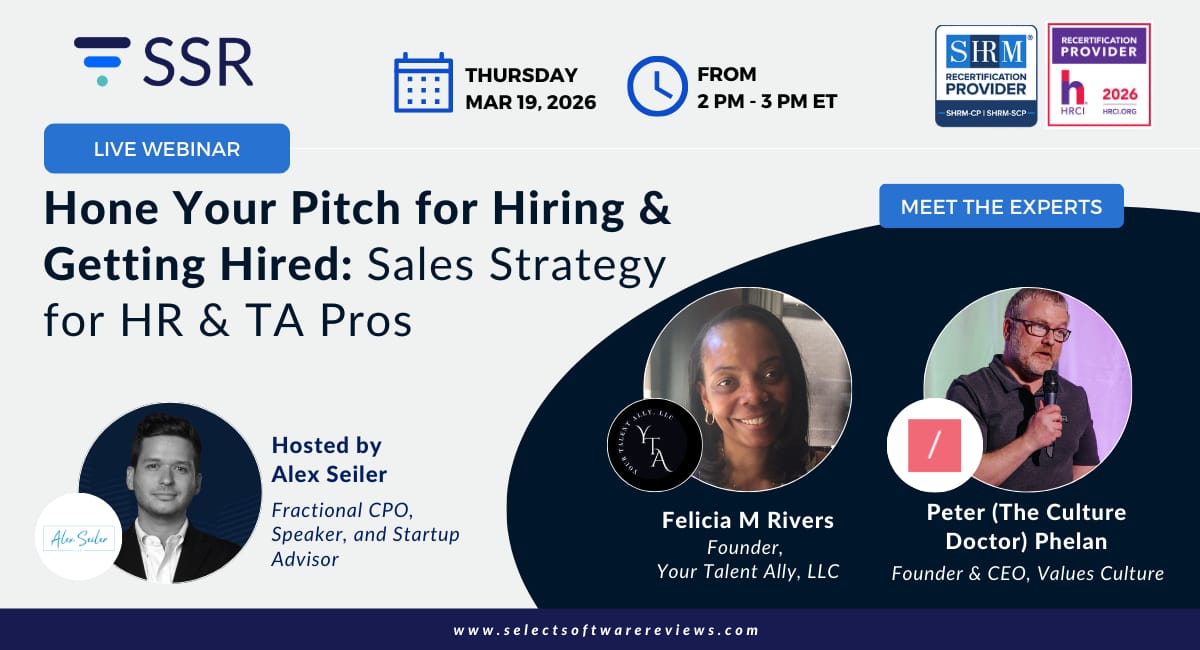
In this practical, insight-driven session, we’ll explore how core sales principles can elevate your effectiveness across every stage of the talent lifecycle.
From crafting a compelling pitch to passive candidates, to influencing stakeholders who are resistant to change, to positioning your own experience for your next career move, you’ll learn how to communicate value with clarity and confidence.
🙋♀️ Women lead employee engagement by 6 points, but burnout remains higher
Women working full time in the U.S. report stronger employee engagement and higher motivation for career growth than men, signaling a highly committed segment of the workforce with strong leadership potential.
At the same time, women are significantly more likely to report experiencing burnout. For HR teams, this creates an important balancing act.
Key insights
📈 Women report higher workplace engagement: 34% of women are engaged at work compared with 28% of men, a six point gap.
🔥 Burnout is also higher among women: 31% say they very often or always feel burned out compared with 23% of men.
👩👧 Mothers report the highest burnout levels: 33% of women with children report frequent burnout compared with 25% of men with children.
🚀 Women show stronger career growth motivation: 20% say they are extremely motivated to pursue career advancement compared with 16% of men.
🧑💼 46% of U.S. adults are unmarried as the solo economy reshapes workplace benefits
Workplace benefits have long been designed with families in mind, but workforce demographics are shifting. A growing share of employees now live alone or remain unmarried, creating a rise in what researchers call the “solo economy.”
For HR leaders, this shift raises important questions about how benefits and policies are structured.
How well do your current benefits support employees who are single? |
Key insights
📊 Single households are a major workforce segment: 46% of U.S. adults are unmarried and about 29% live alone.
⚖️ Benefits often prioritize families: many policies center on parental leave and childcare support, leaving fewer structured benefits for single employees.
🧠 Workplace assumptions can create inequity: single employees are often expected to work longer hours or be more flexible with schedules.
🏢 HR can close the benefits gap: inclusive policies can include broader leave options, fair workload expectations, community building programs, and equitable compensation.
Thanks for reading HR Insights Today. There’s always something changing in HR. New tools, new trends, new chaos. Not everyone to keep up with everything happening in HR so we do it for you. Each edition brings a quick, curated mix of news, resources, and learnings to help you stay updated.
BTW: This newsletter is powered by SelectSoftware Reviews. Their HR software matching service is a free resource HR pros can use to compare tools, dodge bad software, and make confident decisions (without spending hours researching). Worth checking out if you’re exploring vendors. Learn more about how it works.
How was today's edition?Rate this newsletter. |

Sophia Bennett | Editor-in-Chief | HR Insights Today