- HR Insights Today
- Posts
- 📊 78% of employees say they’ve been “voluntold” to take extra responsibilities
📊 78% of employees say they’ve been “voluntold” to take extra responsibilities
Inside: Gen Z and the “career lily pad” strategy

Sophia Bennett
March 12, 2026

Presented by
Hey HR Pros!
“Can you take this on?”
Most HR leaders know that question sometimes isn’t really a question. It’s what many employees call being “voluntold”: when someone is assigned a task, project, or extra responsibility that’s framed as a voluntary ask.
In this edition, we look at why “voluntold” work shows up so often in organizations, how it affects employee trust and engagement, and what HR leaders can do to make sure opportunities feel genuinely optional instead of quietly mandatory.
Upcoming In This Issue:
📊 78% of employees say they’ve been “voluntold” to take on extra responsibilities at work
📊 Only 18% organizations say they have achieved strategic internal communications
🤖 30% of employees are already AI power users and report stronger workplace relationships
🐸 Gen Z and the “career lily pad” strategy
A few years ago, our HR team started growing along with the company, and we realized it was time to invest in proper HR software. We began looking into the basics like an HRIS to manage employee data, payroll software to run payroll, and an ATS to speed up hiring. But...
Every category had dozens of vendors.
Every platform claimed to do everything.
Every “top tools” list online looked completely different.
And when you’re part of a small HR team, you don’t exactly have time to sit through endless calls with different vendors.
Around that time, someone recommended SSR’s HR software matching service to us. The interesting part was that it was completely free, so we figured there was no harm in trying it.
We shared a few details about our company, what we needed help with, and our budget. Soon after, we received personalized HR software matches and introductions to those vendors.
Just like that, our options went from hundreds of tools to 2–3 that actually made sense for our situation. Reviewing them and making a decision suddenly felt so much more manageable.
Honestly, I now recommend it to any HR team facing the same challenge of finding the right software. Even if your team is a bit larger, it can save you a lot of time. And since it’s free, there’s really not much to lose!
📰 Latest in HR News
Levi Strauss faces age bias suit after allegedly refilling axed role
Layoffs, cost-cutting shatter IT worker confidence
Uber CEO: Work hard or we’ll ‘push you out’
📊 78% of employees say they’ve been “voluntold” to take on extra responsibilities at work
A new survey of 2,000 employed Americans highlights the growing workplace trend of employees being “voluntold” into additional work.
The term refers to situations where employees are assigned new responsibilities they did not apply for or agree to, but are still expected to complete.
For HR leaders, the trend raises questions around role clarity, workload management, and how additional responsibilities are communicated and supported within organizations.
How common is “voluntold” work in your organization? |
Key insights
📌 What “voluntold” means in practice: 91% of workers given additional responsibilities say those tasks fall outside their original job description.
⚠️ Staffing gaps are a major driver: 37% of employees say new responsibilities were assigned because organizations lacked enough staff.
📉 Many assignments happen without discussion: 28% say extra work was added without a conversation with their manager beforehand.
📊 Temporary roles often become permanent: 17% of employees say responsibilities initially framed as temporary ultimately became long term expectations.
📊 Only 18% organizations say they have achieved strategic internal communications
A global survey of more than 1,300 HR and communications professionals highlights a growing gap between the role internal communications should play and how it actually operates inside many organizations.
The findings point to increasing pressure on HR and comms teams to support constant organizational change, manage growing communication volumes, and strengthen employee experience.
At the same time, leadership trust, workforce readiness, and communication clarity are emerging as critical factors in keeping employees aligned and engaged during ongoing transformation.
How mature is internal communication strategy in your organization today? |
Key insights
📉 The strategy gap remains significant: Nearly three quarters of organizations aim for strategic communications, but only 18% say they have successfully achieved it.
🔥 Communication overload is raising burnout risk: High volume messaging environments increase the likelihood of employee burnout by 16%, making audience fatigue a growing concern.
📢 Change communication capability is lacking: Change management is the most in demand communication skill, yet 61% of organizations have no formal change communications approach.
💼 EVP remains an untapped retention tool: Only 15% of organizations have a clearly defined and socialized employee value proposition, while more than one third have none at all.
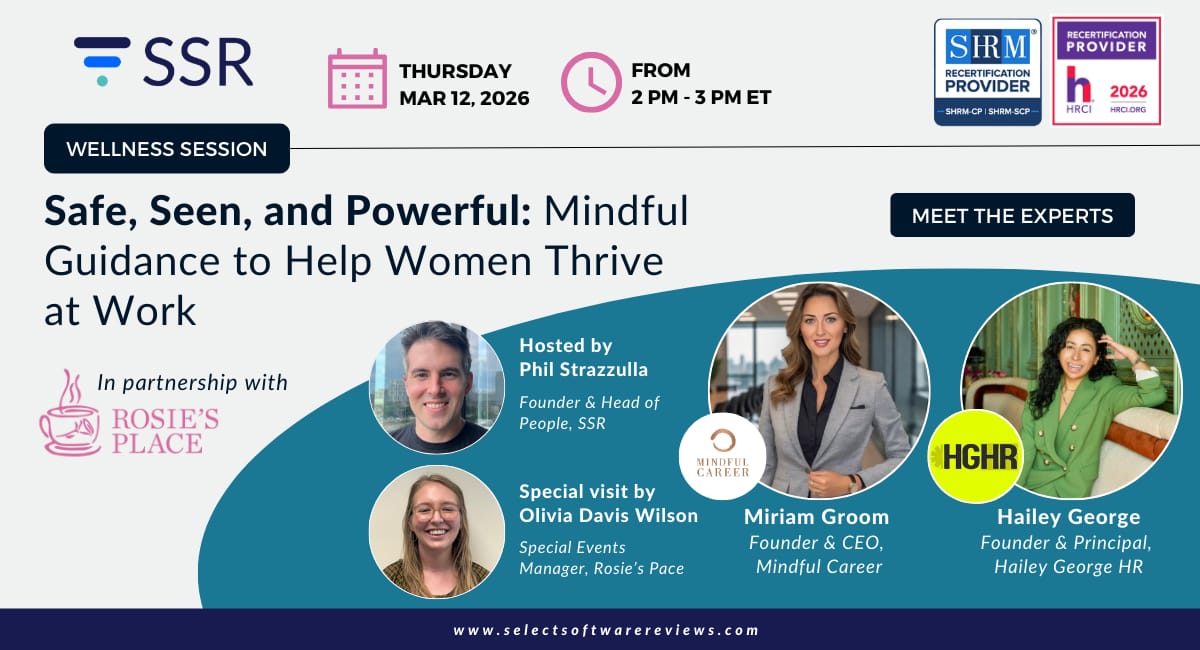
Part discussion and part mindfulness training, this session offers practical approaches HR teams can use to foster psychological safety, encourage presence and self-trust, and design wellbeing initiatives that acknowledge the realities women face at work.
Plus, attend live to get the chance to win a $100 gift card for a night off!
🤖 30% of employees are already AI power users and report stronger workplace relationships
New global workplace research suggests AI may strengthen workplace connections rather than weaken them. About 30% of employees are considered AI power users, and the data shows they spend less time working alone and more time collaborating, learning, and socializing with colleagues.
For HR leaders navigating AI adoption, the findings highlight a critical shift in how work happens. As routine tasks become automated, employees may have more time for problem solving, idea sharing, and relationship building. This dynamic places greater importance on workplaces and cultures that support collaboration, trust, and learning.
How is AI affecting collaboration in your workplace so far? |
Key insights
👥 AI users spend less time working alone: Employees who regularly use AI spend less time working independently and more time collaborating, learning, and socializing at work.
📚 Learning becomes a bigger part of work: 70% of AI power users say learning and professional development are critical to job performance compared to 44% of late adopters.
🤝 Stronger team relationships are reported: AI power users score higher on trust, collaboration, reliability, and meaningful workplace friendships than employees who rarely use AI.
🏢 Workplaces may become more human centric: As AI handles routine tasks, organizations may need environments that prioritize connection, creativity, and collaboration to support evolving roles.
🐸 Gen Z and the “career lily pad” strategy
A growing number of Gen Z professionals are approaching career growth through what is increasingly described as the “career lily pad” strategy.
Instead of climbing a traditional corporate ladder step by step, many workers are choosing to move across roles, skills, and opportunities to broaden their experience. This non linear approach allows employees to build diverse capabilities and maintain flexibility in a labor market shaped by layoffs, evolving job roles, and emerging technologies.
How common is the “career lily pad” approach among younger employees in your organization? |
Key insights
🐸 The “career lily pad” reflects non linear career growth: Many Gen Z workers prefer moving between roles or opportunities to build skills instead of climbing a single promotion ladder.
💼 Management is no longer the primary destination: 68% of Gen Z employees say they would accept a management role mainly if it includes a pay increase or stronger title incentives.
🔄 Strategic job hopping supports skill expansion: Moving between organizations or roles can help employees gain broader experience as new career paths emerge.
📉 Workplace instability reinforces flexible career planning: Layoffs, flattened hierarchies, and uncertain job security are encouraging workers to diversify their experience rather than rely on one long term role.
Thanks for reading HR Insights Today. There’s always something changing in HR. New tools, new trends, new chaos. Not everyone to keep up with everything happening in HR so we do it for you. Each edition brings a quick, curated mix of news, resources, and learnings to help you stay updated.
BTW: This newsletter is powered by SelectSoftware Reviews. Their HR software matching service is a free resource HR pros can use to compare tools, dodge bad software, and make confident decisions (without spending hours researching). Worth checking out if you’re exploring vendors. Learn more about how it works.
How was today's edition?Rate this newsletter. |

Sophia Bennett | Editor-in-Chief | HR Insights Today