- HR Insights Today
- Posts
- 💼 89% of employees say they are satisfied with employer sponsored health coverage
💼 89% of employees say they are satisfied with employer sponsored health coverage
Inside: Employee confidence dips to 44.3%

Sophia Bennett
March 15, 2026

Presented by
Hey HR Pros!
Employee expectations around benefits continue to evolve, but one area remains remarkably consistent: health coverage.
For HR leaders navigating rising healthcare costs and competitive talent markets, the findings reinforce an important reality. Health coverage is a central pillar of financial security, employee experience, and retention strategy.
Upcoming In This Issue:
🙍 Employee confidence dips to 44.3% as tech and senior leaders report sharper outlook declines
🧠 New research introduces a scale that measures employees’ susceptibility to corporate jargon
⚠️ AI related outages prompt Amazon to review engineering processes and add new safeguards
💼 89% of employees say they are satisfied with employer sponsored health coverage
 | HR Insights Today readers have access to SSR’s free HR software matching service to find the perfect HR, ATS, and Payroll Software for your organization. SSR’s HR software experts will tailor a vendor shortlist based on your needs. No fees, no commitments, just great insights from HR experts. |
📰 Latest in HR News
AI trailed DEI, immigration in terms of 2025 compliance impact, employers say
Current and former Block workers say AI can’t do their jobs after Jack Dorsey’s mass layoffs: ‘You can’t really AI that’
‘Devastating blow’: Atlassian lays off 1,600 workers ahead of AI push
A timekeeping software outage at Honda results in a lawsuit settlement of $2.3M
🙍 Employee confidence dips to 44.3% as tech and senior leaders report sharper outlook declines
Employee confidence continues to soften, with 44.3% of employees reporting a positive six month business outlook, down from 45.9% the previous month.
The data signals a cooling sentiment across the workforce even as parts of the labor market show signs of improvement. Several industries are experiencing more pronounced drops, particularly those navigating layoffs, policy uncertainty, or economic pressure.
For HR leaders, the trend highlights the importance of understanding where sentiment is shifting across industries and seniority levels and how internal communication, workforce planning, and employee experience strategies may need to adapt as confidence fluctuates.
How would you describe employee confidence at your organization right now? |
Key insights
📉 Employee confidence fell to 44.3% overall with the share of workers reporting a positive six month business outlook dropping 1.6 percentage points month over month.
💻 Technology saw the steepest annual decline with employee confidence falling 7.1 percentage points year over year despite increased investment in AI and data centers.
👔 Senior level confidence dropped sharply declining 4.1 percentage points over the past year while entry and mid level sentiment remained largely stable.
🏭 Tariff exposed industries face weaker outlooks with manufacturing and transportation and logistics both experiencing a 1.5 percentage point drop in employee confidence year over year.
🧠 New research introduces a scale that measures employees’ susceptibility to corporate jargon
Researchers developed the Corporate Bullshit Receptivity Scale, a tool that evaluates how likely employees are to view jargon heavy statements as insightful or business savvy.
The findings suggest that susceptibility to jargon driven messaging may shape how employees perceive leadership and interpret strategy, offering HR leaders a new lens for understanding communication dynamics, decision making capability, and leadership influence within organizations.
How much does corporate jargon influence communication in your organization? |
Key insights
📊 The Corporate Bullshit Receptivity Scale measures how strongly employees perceive jargon filled statements as insightful or competent even when the statements contain little concrete meaning.
🧪 Researchers tested the scale using more than 1,000 office workers who evaluated computer generated corporate jargon alongside real quotes from executives.
🧠 Higher scores on the scale correlated with lower analytic thinking and cognitive reflection suggesting employees more impressed by jargon may struggle with practical reasoning.
🔁 Employees more receptive to corporate jargon were also more likely to spread it reinforcing cycles where vague language influences leadership perception and workplace culture.
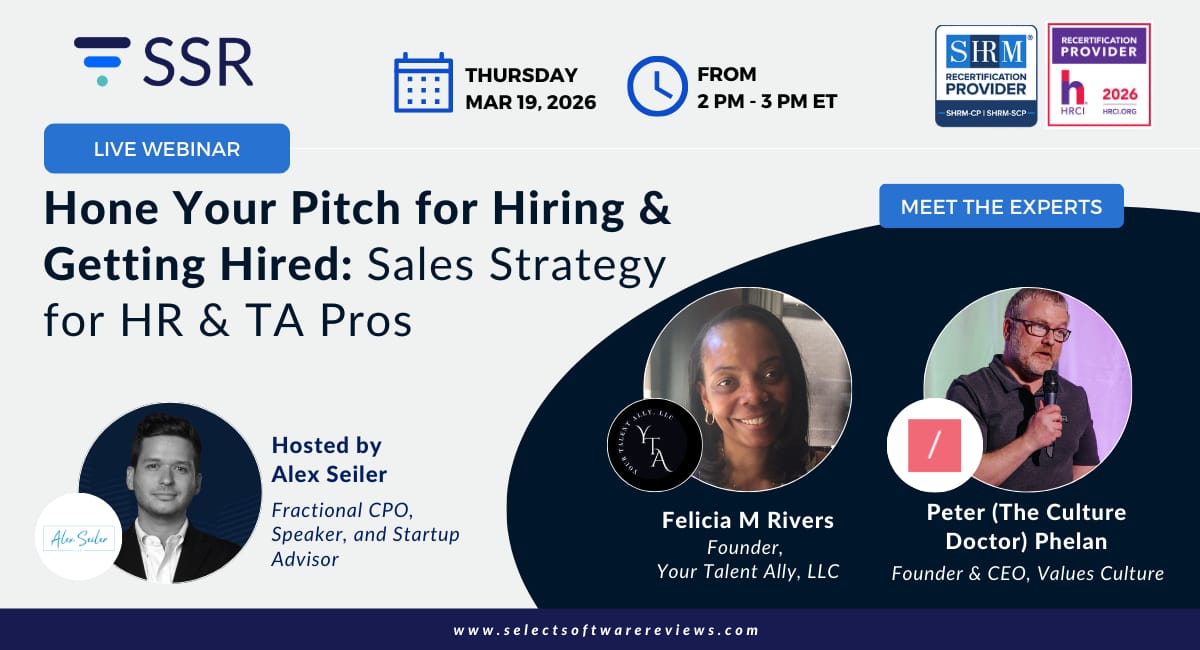
In this practical, insight-driven session, we’ll explore how core sales principles can elevate your effectiveness across every stage of the talent lifecycle.
From crafting a compelling pitch to passive candidates, to influencing stakeholders who are resistant to change, to positioning your own experience for your next career move, you’ll learn how to communicate value with clarity and confidence.
⚠️ AI related outages prompt Amazon to review engineering processes and add new safeguards
After a series of service disruptions, Amazon took a closer look at how AI assisted coding is being used across its engineering teams. The review followed incidents that caused website crashes, app failures, and checkout issues affecting thousands of users.
The outcome points to a familiar challenge organizations face as AI adoption accelerates. While automation can speed development, it also increases the need for oversight, governance, and experienced talent capable of reviewing and validating AI generated work.
Key insights
🔎 Amazon conducted an internal deep dive into a trend of operational incidents reviewing engineering changes since late 2025 that had a high operational impact.
🤖 Some outages were linked to AI assisted coding tools which prompted leadership to evaluate how AI generated code is reviewed and deployed.
🛠 New safeguards will add friction to changes affecting critical retail systems while longer term deterministic and agentic protections are developed.
👨💻 Engineers using AI assisted tools will now need senior level sign off adding an additional human checkpoint before changes reach production systems.
💼 89% of employees say they are satisfied with employer sponsored health coverage
A recent national survey of more than 5,300 U.S. workers highlights the continued importance of employer sponsored health coverage in workforce satisfaction and retention.
Nearly 9 in 10 employees report being satisfied with their current health plan, reinforcing the role health benefits play in the overall employee value proposition.
For HR leaders, the findings reinforce how health benefits remain one of the most influential components of total rewards strategy and a critical lever for attracting and retaining talent.
How important is health coverage in your organization’s talent attraction and retention strategy? |
Key insights
📊 89% of workers report satisfaction with employer sponsored health insurance with 47% very satisfied and 42% somewhat satisfied with their current plans.
💰 96% say employer health coverage is important to household financial security and 69% say losing coverage would cause significant financial hardship.
🏥 Health insurance ranks as the top workplace benefit for 68% of employees ahead of retirement plans and paid time off.
🔁 85% of workers say they would consider leaving their job if health insurance were removed highlighting its importance for retention strategies.
Thanks for reading HR Insights Today. There’s always something changing in HR. New tools, new trends, new chaos. Not everyone to keep up with everything happening in HR so we do it for you. Each edition brings a quick, curated mix of news, resources, and learnings to help you stay updated.
BTW: This newsletter is powered by SelectSoftware Reviews. Their HR software matching service is a free resource HR pros can use to compare tools, dodge bad software, and make confident decisions (without spending hours researching). Worth checking out if you’re exploring vendors. Learn more about how it works.
How was today's edition?Rate this newsletter. |

Sophia Bennett | Editor-in-Chief | HR Insights Today