- HR Insights Today
- Posts
- 🤕 Are you in a job situationship?
🤕 Are you in a job situationship?
Inside: AI makes work easier to start and harder to stop

Sophia Bennett
February 12, 2026

Presented by
Hey HR Pros!
Employees are staying for stability while quietly disengaging, sitting in a gray zone between commitment and the door.
For HR, this “job situationship” might be telling them to look past tenure and into what’s driving day-to-day experience: manager quality, workload realism, and whether internal moves are truly accessible.
Upcoming In This Issue:
🤕 93% stay for stability. Are you in a job situationship?
😮💨 Job seekers are paying recruiters now. Some hand over 20% of their first month’s pay.
📉 69% say their skills and abilities are not fully used in their current roles
🤖 AI makes work easier to start and harder to stop

Evaluating HR software can easily turn into weeks of demos, comparisons, and follow-ups. For teams that work with SSR’s HR Software Advisor, the experience looks very different.
HR pros have described the process as focused, informative, and respectful of their time. Conversations stay productive, options get clearer quickly, and decisions don’t drag on longer than they need to.
If you’re looking for a more efficient way to move forward on HR software decisions, this free resource is so worth exploring!
📰 Latest in HR News
Kaiser reaches settlement with DOL over alleged mental healthcare access failures
Target layoffs come at the cost of fixing in-store experience
Cigna to lay off about 2,000 employees and offer voluntary separations
Applicant sues Allied Universal for pulling offer over flawed background check
🤕 93% stay for stability. Are you in a job situationship?
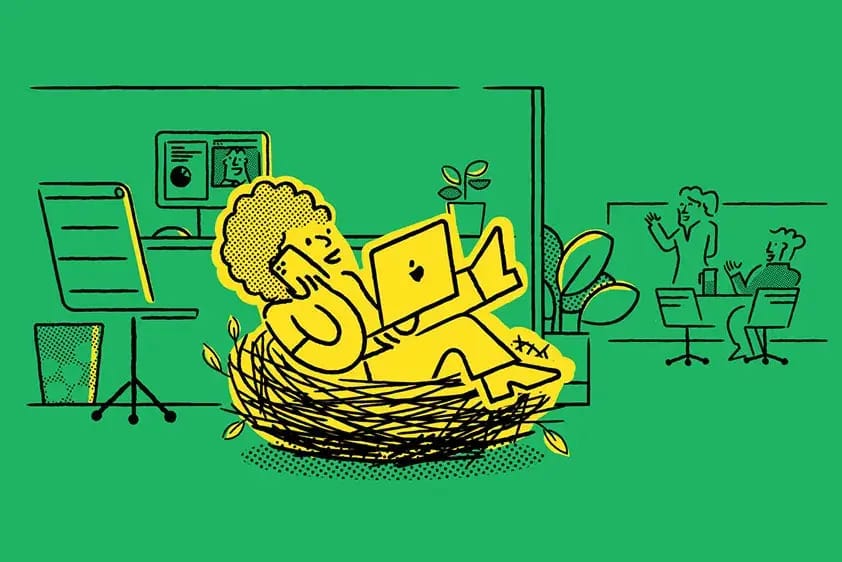
I’m seeing more employees treat their role less like a long-term commitment and more like an “it’s complicated” arrangement. The “job situationship” is the new middle ground: not engaged enough to thrive, but not ready (or able) to leave.
Key Insights
A large majority (93%) remain in jobs they don’t love because predictability outweighs dissatisfaction.
74% doubt they can do what they love. Most workers don’t believe fulfilling work is realistic in today’s job market.
Leadership is the tipping point 🧭 — Management is cited as a primary reason people stay, and the fastest way good jobs turn bad.
Bad experience predicts churn ⚠️ — Workers leaving 1-star reviews are 81% more likely to switch employers than 5-star reviewers.
Internal moves can also reset the experience 🔁 — Switching teams, escaping toxicity, or landing a stronger manager can meaningfully change satisfaction.
😮💨 Job seekers are paying recruiters now. Some hand over 20% of their first month’s pay.
I’m watching the hiring market flip in a way HR teams should recognize immediately: candidates are buying help to get seen.
Instead of coaching only, these services often run the search—submitting applications, packaging candidates for specific roles, and brokering introductions that bypass standard queues.
For employers, it’s a new signal that parts of the candidate experience are becoming paywalled, especially for white-collar roles under pressure.
Key insights
Pay-to-play recruiting emerges 💸 Candidates fund search help, sometimes paying 20% of first month’s pay after landing roles through introductions directly.
Market pressure is real 📉 Late-2025 data showed more unemployed than openings, and searches nearing six months on average now nationwide.
Automation drives the workaround 🤖 Services apply on candidates’ behalf, demanding ATS logins and even AI-written messages posing as applicants today.
Results and ethics vary ⚖️ One agency claims 20 of 44 placements while charging $1,500 monthly plus 10% of salary earned.
HR LOLs

📉 69% say their skills and abilities are not fully used in their current roles
When jobs don’t stretch people, “engagement” problems often show up later as performance dips, stalled development, and surprise attrition.
This article positions underutilization as a measurable risk—not a soft sentiment—because it links day-to-day challenge, recognition, and leadership follow-through to how long employees expect to stay.

Key insights
Work is often not challenging 💤 87% describe day-to-day work as only moderately challenging or less.
Turnover risk rises fast 🚪 72% would likely job hunt if consistently underutilized, and 67% would consider leaving within a year.
Leaders aren’t acting 🧭 80% say leadership doesn’t notice underutilization or notices but rarely takes action.
Career progression slows 📈 77% say underutilization has slowed their career progression to some degree.
🤖 AI makes work easier to start and harder to stop
As tasks become faster to begin and easier to advance in small increments, employees can slip work into moments that used to be pauses. Over time, that changes the rhythm of collaboration, the pace people feel expected to maintain, and the number of active threads they carry at once.
For HR leaders, the implication is practical: AI rollout needs guardrails for workload, boundaries, and decision quality, not just training and licenses.
Key insights
AI intensifies work even without mandates ⚙️ In an eight-month study at a ~200-person tech firm, employees voluntarily sped up and did more.
Work boundaries blur through micro-work 🕒 “Quick prompts” during breaks and after-hours reduce recovery time and make work feel ambient.
Multitasking becomes the default 🧠 Parallel AI threads increase context switching, cognitive load, and pressure for speed.
Early productivity can mask later risk 🚨 Voluntary “fun” experimentation can turn into workload creep, burnout, weaker judgment, and turnover.
Three guardrails to build into norms 🧩 Intentional pauses, sequencing (batching and focus windows), and human grounding through check-ins and dialogue.
Thanks for reading HR Insights Today. There’s always something changing in HR. New tools, new trends, new chaos. Not everyone to keep up with everything happening in HR so we do it for you. Each edition brings a quick, curated mix of news, resources, and learnings to help you stay updated.
BTW: This newsletter is powered by SelectSoftware Reviews. Their HR software matching service is a free resource HR pros can use to compare tools, dodge bad software, and make confident decisions (without spending hours researching). Worth checking out if you’re exploring vendors. Learn more about how it works.
How was today's edition?Rate this newsletter. |

Sophia Bennett | Editor-in-Chief | HR Insights Today