- HR Insights Today
- Posts
- 👶 Is this workplace policy innovative support or operational risk for HR leaders?
👶 Is this workplace policy innovative support or operational risk for HR leaders?
Inside: 60% of women see pay disadvantage

Sophia Bennett
April 05, 2026

Presented by
Hey HR Pros!
An emerging workplace policy is challenging traditional assumptions about parental leave by allowing employees to bring infants into the office during their first months of life.
While the approach may strengthen retention and culture, it also introduces operational complexities that may not translate across roles or environments.
Upcoming In This Issue:
🔥 33% of entry-level roles expected to be AI-shaped as Gen Z signals readiness
👶 Is this workplace policy innovative support or operational risk for HR leaders?
😟 52% of workers fear AI job impact as mental health strain rises among AI talent
💰 60% of women see pay disadvantage as perception gaps widen across the workforce
Looking for a simpler, more time-efficient way to navigate HR software solutions? HR software advisors from SSR has helped HR leaders do exactly that. Here’s one example 👇️

📰 Latest in HR News
The US Interior Department turns to staff cuts by incentivizing employees to leave
Starbucks adds performance bonuses for front-line workers
EEOC sues Butterball for firing employee undergoing cancer treatment
Despite March’s strong job gains, labor trends suggest talent shortages ahead
🔥 33% of entry-level roles expected to be AI-shaped as Gen Z signals readiness
Gen Z talent is entering the workforce with a clear-eyed view of AI’s impact, expecting one-third of their roles to be automated or augmented while still feeling largely prepared to work alongside it.
For HR leaders, the tension is not resistance but acceleration, as emerging talent actively builds both technical fluency and distinctly human capabilities to stay competitive.
Key insights
AI anxiety coexists with optimism 🤖 81% expect disruption within five years, yet curiosity and excitement dominate emotional responses over fear or hesitation
Human skills are the real differentiator 🧠 Critical thinking, adaptability, and creativity rank above technical expertise as Gen Z’s top focus areas for career resilience
Learning expectations are highly practical 📊 Interns prioritize day-to-day AI productivity skills over advanced modeling, signaling demand for immediately applicable training programs
Culture and connection still drive retention 🤝 93% say workplace friendships influence return decisions, reinforcing the value of in-person mentorship and collaborative environments
👶 Is this workplace policy innovative support or operational risk for HR leaders?
A Texas city is testing a workplace policy that allows employees to bring newborns to work for their first six to nine months, offering an alternative to traditional parental leave in a context where paid leave is limited.
The program is designed to reduce workforce attrition among new parents while supporting early bonding, breastfeeding, and a smoother return to work.
Would you consider implementing an “infants at work” policy in your organization? |
Key insights
Retention strategy born from constraint 💼 Program emerged as a cost-effective alternative to paid leave, addressing turnover risks among new mothers in particular
Work design determines feasibility 🧩 Eligibility depends heavily on role type and team support, limiting scalability across operational or customer-facing positions
Culture becomes a core benefit driver 🤝 Teams actively support caregiving, with shared responsibility improving morale and strengthening workplace connection across departments
Caregiving integration impacts performance norms 📊 Employees continue fieldwork and office responsibilities with infants present, redefining expectations around productivity, focus, and flexibility
In this session, we’ll unpack the signals that it’s time to evolve your HR operating model, how to assess whether staying with a PEO still makes financial and strategic sense, and what it really takes to build internal systems that scale. 🪴 Join live to win one of two desk plants to make your workspace a little bit brighter! | 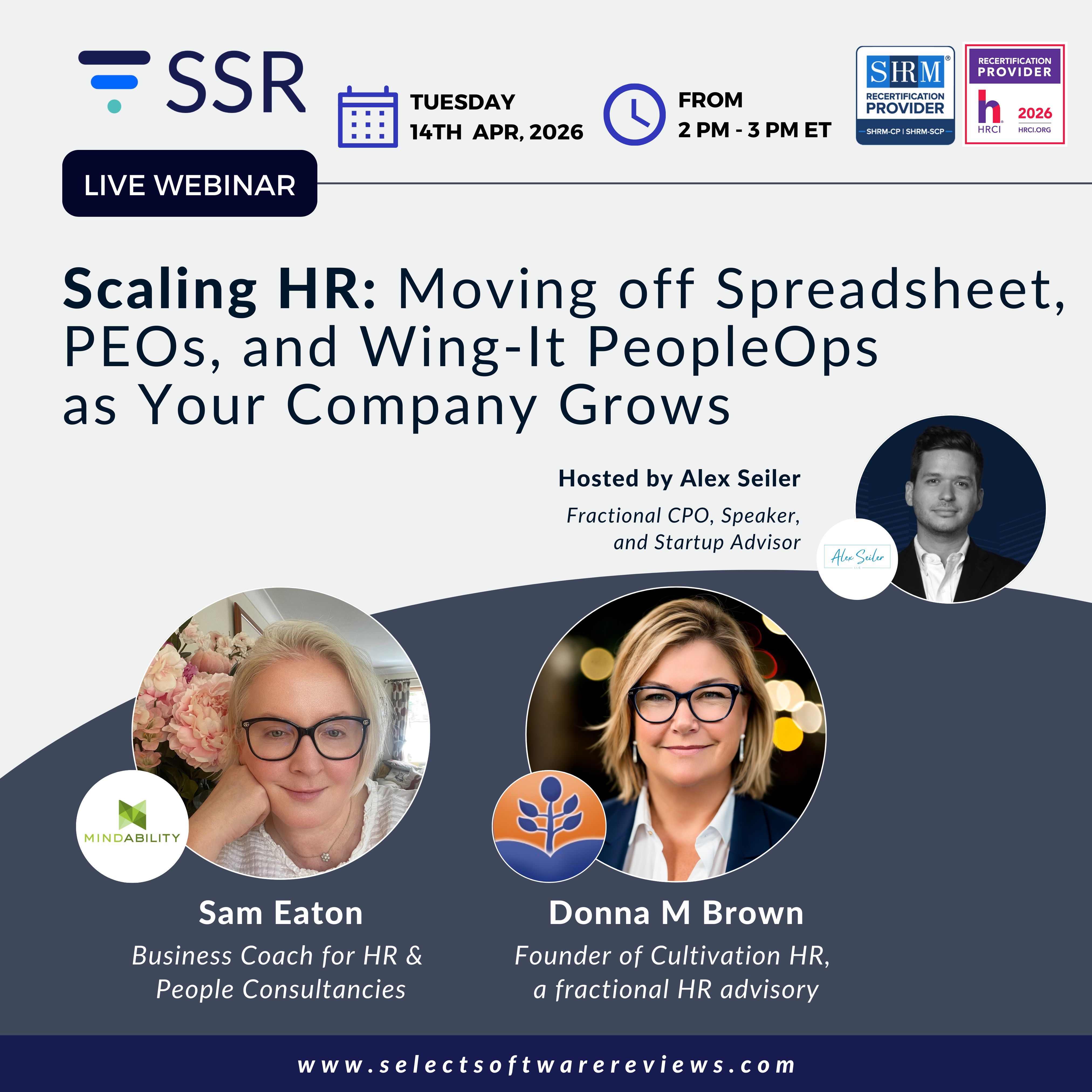 |
😟 52% of workers fear AI job impact as mental health strain rises among AI talent
Therapists report a surge in AI professionals seeking support, with anxiety driven by job insecurity, ethical concerns, and the pace of development.
At the same time, heightened performance expectations and long working hours are intensifying burnout, even as organizations position AI as a productivity enhancer.
Key insights
AI-driven anxiety is becoming widespread 📉 52% of workers fear job impact, with existential concerns rising sharply among those building AI systems
Productivity gains are increasing pressure ⏱️ AI tools are raising output expectations, leading to longer hours and intensified performance demands rather than workload reduction
Ethical tension is affecting engagement ⚖️ Employees express stress about the societal consequences of their work and lack of oversight in how AI is deployed
Support systems are lagging behind need 🧑⚕️ Demand for in-person therapy is rising while behavioral health provider shortages limit access for struggling employees
💰 60% of women see pay disadvantage as perception gaps widen across the workforce
Gender pay equity is becoming as much a perception challenge as a policy one, with a clear divide between how men and women view opportunity, fairness, and compensation.
A majority of working women believe men have an advantage in earning potential, while men are far more likely to see the system as equitable, creating a disconnect that can influence engagement, trust, and retention.
For HR leaders, this highlights a growing need to address pay practices, as well as transparency, communication, and employee perception of fairness.
Key insights
Perception gap is widening 👀 60% of women see men as having better pay opportunities, while half of men believe opportunities are equal
Lived experience differs sharply 📉 30% of women report personal wage discrimination compared to only about 10% of men
Pay is a top stress driver 💸 Over half of working women cite compensation as a major source of stress, versus roughly 40% of men
Structural factors continue to drive gaps 🧩 Occupational segregation and the motherhood penalty remain key contributors to persistent wage disparities
Thanks for reading HR Insights Today. There’s always something changing in HR. New tools, new trends, new chaos. Not everyone to keep up with everything happening in HR so we do it for you. Each edition brings a quick, curated mix of news, resources, and learnings to help you stay updated.
BTW: This newsletter is powered by SelectSoftware Reviews. Their HR software matching service is a free resource HR pros can use to compare tools, dodge bad software, and make confident decisions (without spending hours researching). Worth checking out if you’re exploring vendors. Learn more about how it works.
How was today's edition?Rate this newsletter. |

Sophia Bennett | Editor-in-Chief | HR Insights Today