- HR Insights Today
- Posts
- 🤯 Only 8% of executives say HR is strategically embedded in the business
🤯 Only 8% of executives say HR is strategically embedded in the business
Inside: A new workforce analysis highlights a pivotal moment in many women’s careers

Sophia Bennett
March 09, 2026

Presented by
Hey HR Pros!
The role of HR is expanding as organizations navigate AI adoption, workforce redesign, and increasing pressure to drive performance. But new research suggests many leadership teams still view HR as operational rather than strategic.
In this edition, we explore what it takes for HR to move from support function to architect of how work gets done, along with new insights on overwork, AI narratives in layoffs, and evolving workplace expectations.
Upcoming In This Issue:
📊 Women’s pay growth stalls around age 35 while the gender pay gap reaches 25 percent over a career
🤯 Only 8% of executives say HR is strategically embedded in the business
⏱️ 73% of employees work more than 40 hours a week as workaholism becomes normalized
🤖 AI Washing | Over 80% of firms report little workforce impact
📰 Latest in HR News
Former Amazon manager claims 'DEI hire' label led to his firing
Claude outage highlights HR’s growing AI risks
A record share of U.S. workers now have access to paid leave
Oracle layoffs expected to affect thousands as AI expansions take the lead
📊 Women’s pay growth stalls around age 35 while the gender pay gap reaches 25 percent over a career
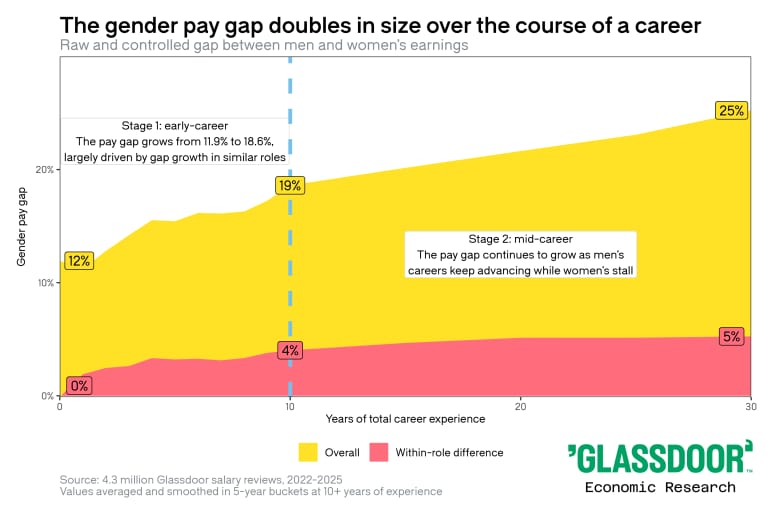
A new workforce analysis highlights a pivotal moment in many women’s careers: earnings growth often plateaus around age 35 while men’s pay continues rising into their 40s.
The research also shows many women shifting how they define career success, prioritizing flexibility, benefits, and total compensation when salary growth stalls.
For organizations focused on equity and retention, the message is clear: mid career support strategies may matter just as much as early career hiring initiatives.
Key insights
📈 The pay gap widens significantly with experience reaching 25 percent after 30 years in the workforce, up from 12 percent at career entry.
👩💼 Women’s earnings often plateau in their mid 30s while men’s continue growing into their 40s, driven largely by differences in promotion and role mobility.
🧩 Structural workplace dynamics drive the widening gap including occupational segregation, caregiving demands, and lower promotion rates into higher paying roles.
💡 Total compensation is becoming a key negotiation lever with employees increasingly prioritizing flexibility, PTO, bonuses, and relocation support when salary growth stalls.
🤯 Only 8% of executives say HR is strategically embedded in the business
Research shows a significant gap between HR’s current priorities and the initiatives executives believe will deliver the greatest return, particularly as AI and automation transform work.
While many HR teams remain focused on employee experience, skills frameworks, and HR technology rollouts, business leaders are prioritizing work redesign, workforce analytics, and leadership capability in hybrid human and AI environments.
How strategically embedded do you think is HR in business decision making at your organization? |
Key insights
📈 Strategically embedded HR correlates with stronger business outcomes with 76 percent of executives reporting higher resilience and 78 percent stronger talent competitiveness.
🤖 AI adoption in HR is widespread but value remains limited as only about one in five organizations report significant ROI from chatbots or automation.
🧠 Executives prioritize different workforce investments than HR teams with leaders focusing on AI enabled work redesign, analytics capability, and manager readiness.
🔧 Legacy HR operating models are under pressure as most organizations still rely on the traditional three pillar model built for compliance rather than agility.
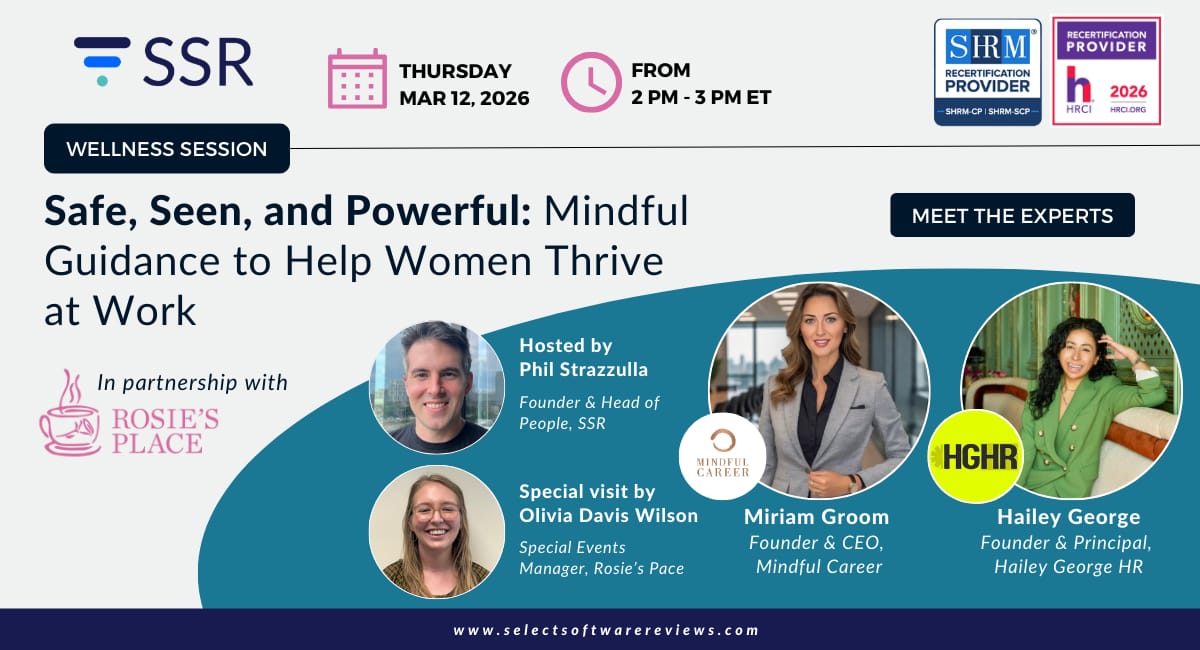
Part discussion and part mindfulness training, this session offers practical approaches HR teams can use to foster psychological safety, encourage presence and self-trust, and design wellbeing initiatives that acknowledge the realities women face at work.
⏱️ 73% of employees work more than 40 hours a week as workaholism becomes normalized
New survey data suggests the traditional 40 hour workweek is increasingly misaligned with how many employees actually work today. A large majority of full time workers report regularly exceeding standard weekly hours, with many openly identifying as workaholics.
At the same time, workplace culture and expectations appear to be major drivers of overwork rather than productivity demands.
For HR leaders, the findings raise important questions about workload design, availability expectations, and the long term sustainability of work patterns that rely on extended hours.
How common is working beyond 40 hours per week in your organization? |
Key insights
🔎 Workaholism has become widely accepted in workplace culture with 76 percent of workers describing themselves as at least somewhat workaholic.
📊 Long hours are now standard for many employees as 73 percent report regularly working more than the traditional 40 hour workweek.
⚠️ Extra hours do not necessarily improve productivity with 80 percent of workers saying working beyond 40 hours does not improve work quality.
🧠 Overwork carries significant health consequences as 85 percent of workers report negative mental or physical health impacts linked to excessive working hours.
🤖 AI Washing | Over 80% of firms report little workforce impact
As layoffs across industries are increasingly attributed to artificial intelligence initiatives, skepticism is growing around whether AI is truly driving workforce reductions or simply being used as a convenient narrative.
The concept of AI washing refers to situations where organizations overstate the role or maturity of AI in order to justify restructuring decisions or position themselves as technologically advanced.
As companies continue investing heavily in AI while evidence of measurable productivity or employment impact remains limited, HR teams may play a critical role in aligning workforce strategy, technology adoption, and credible messaging during periods of organizational change.
Key insights
📉 Evidence of AI driven workforce disruption remains limited with more than 80 percent of firms reporting no measurable impact on employment or productivity.
🧠 AI washing refers to exaggerating AI capabilities to frame layoffs, restructuring, or strategic shifts as technology driven transformation.
📊 Many AI initiatives fail to deliver measurable results with research suggesting roughly 95 percent of AI pilot programs produce limited or no substantial outcomes.
👥 Workforce trust can erode when AI is used as a layoff narrative potentially creating skepticism toward legitimate AI adoption and automation strategies.
Thanks for reading HR Insights Today. There’s always something changing in HR. New tools, new trends, new chaos. Not everyone to keep up with everything happening in HR so we do it for you. Each edition brings a quick, curated mix of news, resources, and learnings to help you stay updated.
BTW: This newsletter is powered by SelectSoftware Reviews. Their HR software matching service is a free resource HR pros can use to compare tools, dodge bad software, and make confident decisions (without spending hours researching). Worth checking out if you’re exploring vendors. Learn more about how it works.
How was today's edition?Rate this newsletter. |

Sophia Bennett | Editor-in-Chief | HR Insights Today