- HR Insights Today
- Posts
- 👀 The Hidden Problem Lurking in Workplaces
👀 The Hidden Problem Lurking in Workplaces
Inside: What Severance Gets Right About Toxic Work Cultures

Sophia Bennett
March 04, 2025

Presented by

Good Morning! 🌞
Welcome to today’s edition of HR Insights Today.
As companies push for change, employees are pushing back—on return-to-office mandates, and rigid workplace cultures. The gap between leadership decisions and employee expectations is growing, and businesses that fail to address it risk losing both talent and trust.
In this edition, we’re looking at how companies can rethink their approach—not just to keep up, but to create workplaces that are smarter, more adaptable, and built for the future.
Upcoming in this issue 📰
🤖 The Hidden AI Problem Lurking in Workplaces
🎭 What Severance Gets Right About Toxic Work Cultures—and How HR Can Fix It
🏢 Why Return-to-Office Plans Keep Failing—And How to Fix Them
⚖️ Navigating the Current Legal Minefield of DEI Policies
HR Leaders’ Go-To for HR Tech Decisions
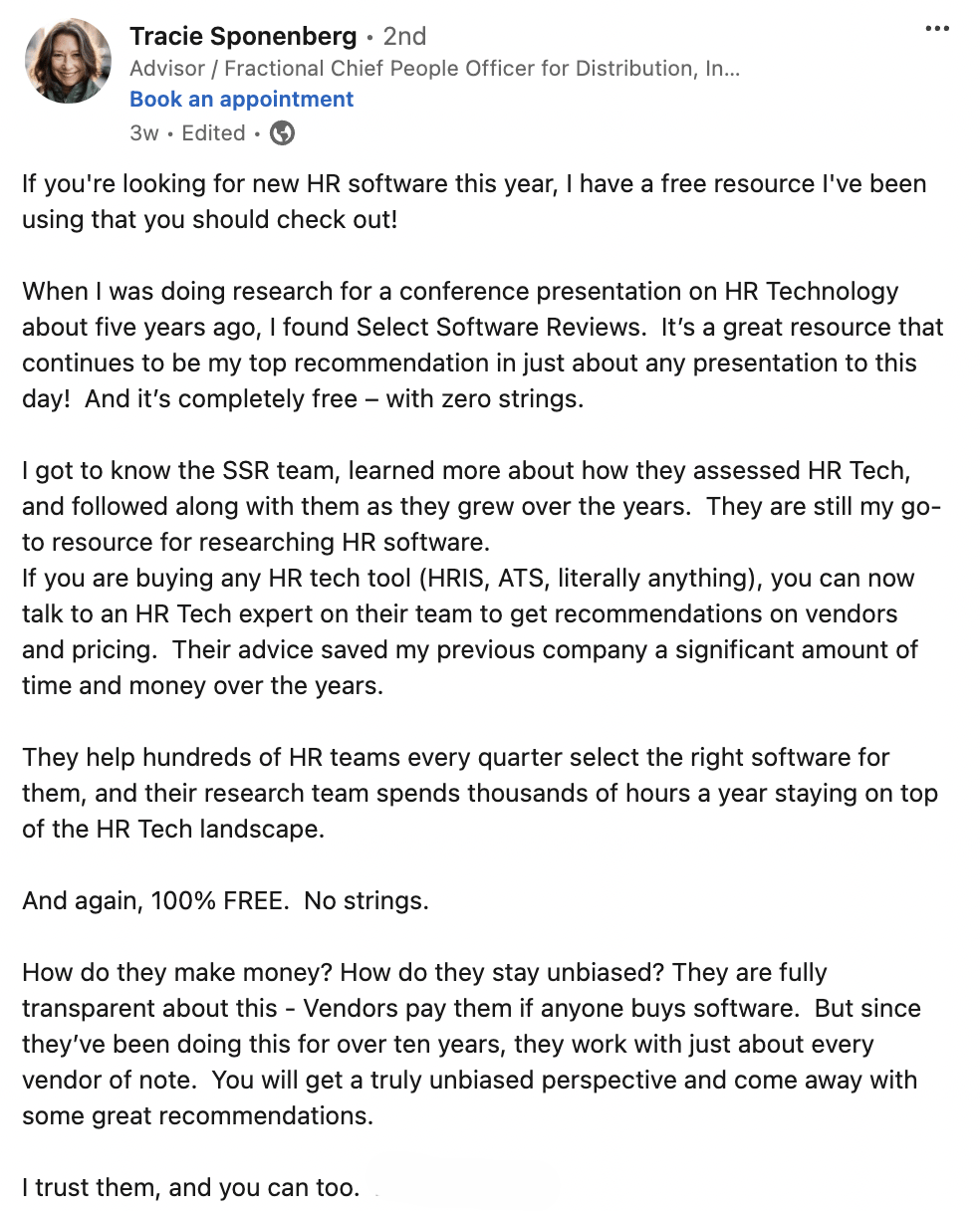
Our sponsor, SelectSoftware Reviews is trusted by HR leaders for their unbiased, expert-backed free HR software matching service. Their HR experts cut through the noise, save time, and help you find the right HR vendor based on your unique requirements.
See what Tracie Sponenberg, Fractional CPO had to say about it! ⬇️
Let’s admit it—if our job didn’t provide AI tools today, we would probably find our own. And apparently, so do a lot of employees.
A new report from TELUS Digital Experience reveals that 68% of employees using AI at work rely on personal GenAI tools like ChatGPT, Microsoft Copilot, or Google Gemini—even if their company already provides AI solutions. Employees using it outside company oversight comes with serious security risks.
Welcome to the era of shadow AI—where employees’ unsanctioned AI use is quietly reshaping workplaces while exposing businesses to potential data breaches.

What HRs Should Know:
⚠️ "Shadow AI" is a growing security risk. Employees using AI without company approval are entering sensitive data into public AI tools, increasing exposure to leaks.
📊 AI is boosting workplace productivity. Employees say AI makes work faster (60%), easier (57%), and improves performance (49%)—which is why they’ll keep using it.
🔍 Many companies lack AI policies. Nearly half (44%) of employees say their workplace has no clear AI rules, and 42% believe there are no consequences for breaking them.
🔑 Secure, company-approved AI isn’t enough. Experts say businesses must provide AI tools that are secure, easy to use, and continuously updated to keep employees from seeking outside alternatives.
TL;DR: Employees are embracing AI—whether companies like it or not. Without clear policies and secure, user-friendly AI solutions, businesses risk data leaks and compliance issues as shadow AI use continues to grow.
🎭 What Severance Gets Right About Toxic Work Cultures—and How HR Can Fix It
Read the full 1,100-word article here (spoilers)
I’ll be the first to admit—I can’t watch Severance (Apple TV+) without seeing the real-world parallels. The eerie corporate loyalty, the bizarre rituals, the way employees are expected to surrender their individuality for the "greater good" of the company.
As Severance Season 2 airs, it's hard not to draw comparisons between Lumon’s cult-like workplace and the very real companies that may have unknowingly fallen into the same trap. From Uber’s relentless “Always Be Hustlin’” era to WeWork’s unchecked ambition, history shows us what happens when corporate culture becomes an obsession rather than a guide.
The real question is—what can HR do to prevent this?

Key Takeaways:
📣 Audit the company narrative. HR should regularly assess whether corporate values inspire employees or pressure them into blind loyalty. Anonymous surveys can help gauge authenticity.
🧠 Prioritize real well-being over perks. Employees want meaningful support, not gimmicks. A 2024 Deloitte study found 68% of employees prefer mental health benefits over bonuses.
⚖️ Decentralize power to prevent toxicity. Strong cultures welcome pushback. HR should amplify diverse voices and hold leadership accountable, ensuring ethics don’t take a backseat.
💡 Create purpose, not pressure. Employees should feel connected to their work without sacrificing their individuality—unlike Lumon’s workforce, where personal identity is erased.
TL;DR: Severance may be fiction, but its critique of corporate culture is all too real. HR’s role isn’t just to build culture—it’s to ensure it doesn’t become a machine that demands everything while giving nothing back.
👀 More Insights For HR Pros:
🧑💼 RTO Mandate turned into Hiring Strategy: Verizon targets hiring of AT&T workers disgruntled by return-to-office push
❌ Meta Employees on Fire: Meta Says It Has Fired 20 Employees For Leaking Information
🗣️ Effective Interview Questions: 2-time CEO always asks this question in interviews: It shows if candidates ‘just want to complain’
📑 'Application overload': Is AI making recruitment harder for HR?
🏢 Why Return-to-Office Plans Keep Failing—And How to Fix Them
I’ll be honest—watching big companies struggle with return-to-office (RTO) plans has been like watching someone try to force a square peg into a round hole.
Amazon, JPMorgan, and AT&T have all pushed for employees to come back, but instead of boosting productivity, they’re dealing with a lack of office space, internal backlash, and employees openly protesting. Many of these companies are acting like it’s still 2019, ignoring how work culture has changed.
Workplace experts say it’s time for a smarter, more flexible approach for an RTO mandate—one that actually considers what employees need.

Key Takeaways For A Smarter RTO:
🏠 The office should feel different from home. Employees return only to spend the day on Zoom—why not create spaces for real collaboration, networking, and team-building?
🛠️ Personalization matters. If employees must come in five days a week, they should at least have their own desk. A dedicated space fosters connection.
🗺️ Plan before enforcing. Companies often announce RTO and scramble to make it work. Understanding employees’ needs first makes transitions smoother.
💬 Communicate the "why." Employees resent mandates with no explanation. Show how in-office work benefits both the company and the individual.
TL;DR: RTO isn’t working because companies are stuck in the past. Experts say the key is creating an office experience that’s actually worth commuting for—whether it’s a dedicated desk, or creating a more inviting workspace that fosters collaboration, offers flexibility, and gives employees a clear reason to be there.
We have all been watching the legal landscape around DEI shift at breakneck speed, and let’s be honest—it’s a mess. Companies are scrambling to figure out what’s still legal, what’s risky, and what’s just plain ineffective.
The reality? Federal and state equal employment opportunity (EEO) laws haven’t changed, but the enforcement climate is a whole new ballgame. Between executive orders, legal threats, and public scrutiny, businesses need to rethink their strategies—fast. This article breaks down what’s at risk, what actually works, and how companies can protect both their policies and their people.

Key Takeaways:
🚨 Setting diversity goals and requiring diverse job candidates can be risky and don’t always work. Even legal diversity efforts may face challenges, and research shows they don’t always lead to more diverse hiring.
📊 Professional development programs face scrutiny, but can be adapted. Companies can lower legal risk by offering development opportunities to broader groups beyond race or gender.
💼 Rebranding DEI may reduce legal exposure. Some firms swap "DEI" for terms like "meritocracy initiative" or "organizational and professional development" to avoid attracting lawsuits.
✅ Low-risk DEI strategies focus on structural change. Standardized hiring, bias audits, and performance-based evaluation systems improve diversity without triggering legal challenges.
TL;DR: With new legal pressures on DEI, companies must be careful. While some diversity policies are under fire, research-backed strategies—like structured hiring and fair promotion systems—can still drive progress while keeping businesses compliant.
PS - Do check out SSR's free HR software matching service. As you know, buying HR software can be stressful and time-consuming. SSR helps you find the right HR software at the right price, saving you both time and money!
How was today's edition?Rate this newsletter. |

Sophia Bennett
Editor-in-Chief
HR Insights Today