- HR Insights Today
- Posts
- The word that defined your workforce in 2025
The word that defined your workforce in 2025
Inside: What 2025 Taught Us About Hiring Friction

Sophia Bennett
December 16, 2025

Presented by
Hey HR Pros!
2025 has been a lot.
If your team’s been feeling drained, distracted, or just not quite themselves, there’s a reason for it. According to Glassdoor, “fatigue” was the word that defined the workforce this year.
Scroll down — we’ve broken down the key trends and what they mean for the year ahead.
Upcoming In This Issue:
😫 Exhausted and Overwhelmed: The Word That Defined Your Workforce in 2025
🧑💼 Report | When the Job Search Feels Like a Dead End: What 2025 Taught Us About Hiring Friction
🎓 Degrees vs. Certificates: What 2025’s Skills-First Shift Means for Your Hiring Strategy
⚠️ Why Corporate Progress on Women Is Slipping, and What HR Must Do Now
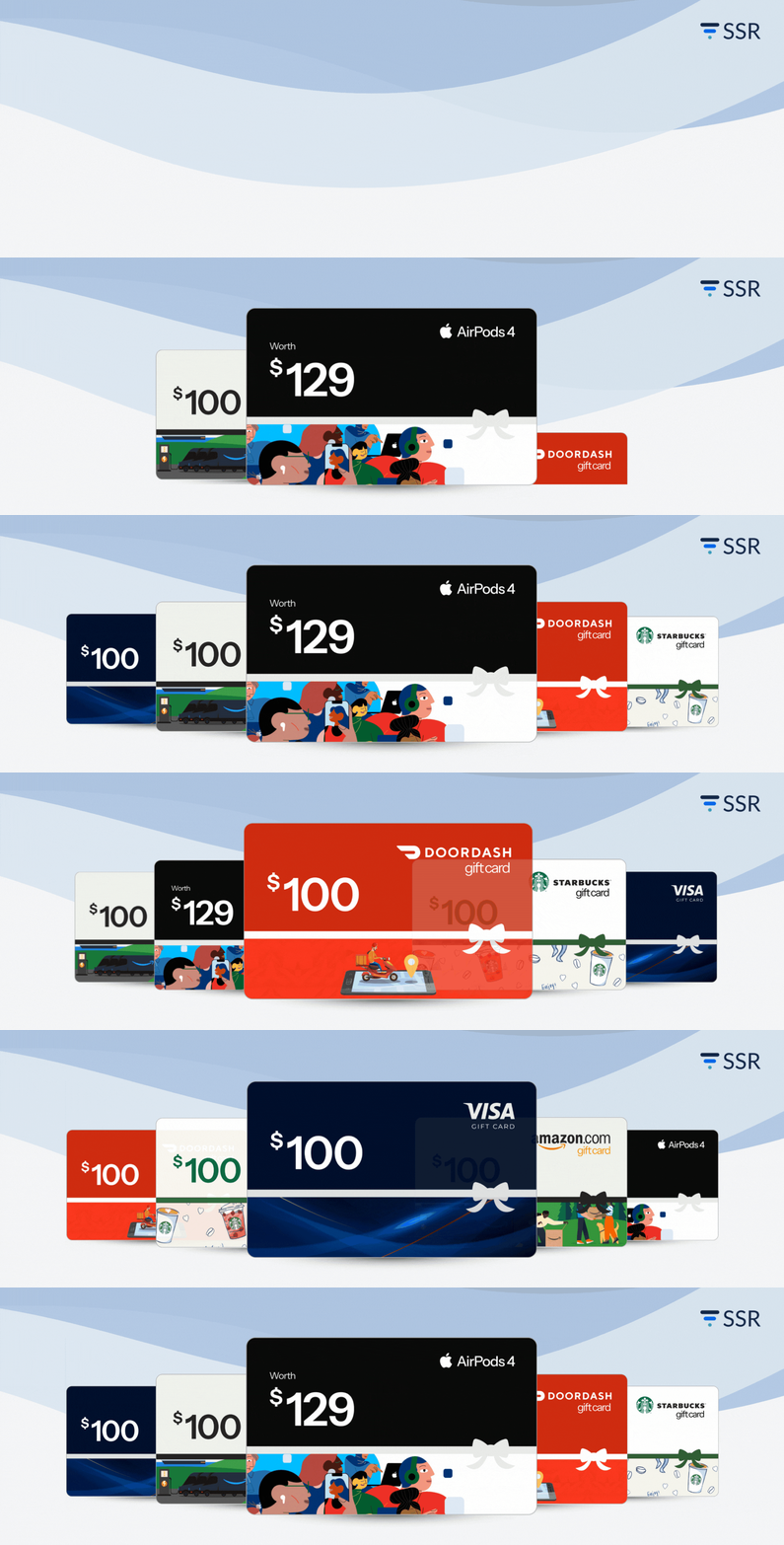
If you’re wrapping up the year with HR software decisions still hanging, this might just make it easier.
Talk to an SSR HR Software Advisor and tell them what you need, what you don’t, and what’s actually worth considering before the year ends. You’ll walk away with clear HR software matches that fit your team and budget.
In order to claim the $100 gift card, complete the calls with your matched vendors and choose between DoorDash, Starbucks, Amazon, and more.*(T&C)
📰 Latest in HR News
Trump calls for federal policy framework preempting state AI laws
No pay raise for salaried employees at John Deere in 2026
JPMorgan conducted ‘fake’ interviews of Black candidates, lawsuit alleges
California court shifts burden to employers over missing meal break records
😫 Exhausted and Overwhelmed: The Word That Defined Your Workforce in 2025
In 2025, fatigue became a defining trait of the modern workforce.
Across industries, employees wrestled with the invisible weight of political tension, economic instability, and AI-induced job insecurity. HR professionals weren’t just navigating burnout; they were managing the mental load of a workforce increasingly overwhelmed by factors well outside their control.
The pressure isn’t easing, and the challenge for HR is no longer simply to boost morale, but to address the root systems feeding this exhaustion.

Key Insights
🗳️ Politics pierced the office bubble
Mentions of "inauguration" spiked 875% as U.S. political shifts flooded into workplace discussions, fueling tension and fatigue.📉 Economic anxiety drove worker unrest
"Stagflation" mentions more than tripled year-over-year, echoing employee fears over inflation, stagnant wages, and job security.🤖 AI stress hit a boiling point
Mentions of "agentic" AI skyrocketed 2,244%, with young workers especially worried about automation pushing them out.🧰 Solutions need to go beyond perks
Experts urge HR to prioritize clear political guardrails, mental health support, and transparent leadership to combat systemic fatigue.
🧑💼 Report | When the Job Search Feels Like a Dead End: What 2025 Taught Us About Hiring Friction
AI screenings, impersonal systems, and long-winded applications are turning the job hunt into a burnout-inducing experience for many candidates, and that friction is starting to reflect back on employers.
As career gaps become normalized and job seekers disengage mid-process, the message is clear: if HR wants to keep talent in the pipeline, the system needs to change.

Key Insights
🤖 AI is ghosting both ways
65% of HR pros say AI is a major reason for increased candidate ghosting—frustrated applicants simply drop out mid-process.⏳ Complexity is killing conversions
57% of candidates abandon applications due to overly complicated steps; 41% feel no human ever reads their resume.📉 Career gaps are surging
Only 48% of candidates had no employment gaps in 2025—down from 57% in 2020—yet many still face bias over them.🚪Burnout is pushing talent out
A growing disconnect between hiring systems and job seekers is leading to early dropout, lost candidates, and missed opportunities.
Upcoming Webinar by SSR: Creating Truly Inclusive Hiring Processes and Workplaces in 2026

This session provides a practical, future-focused discussion designed to help PeopleOps teams move beyond surface-level DEI initiatives and build cultures where every employee genuinely feels safe, respected, and able to thrive.
Attendees will walk away with:
🎓 Degrees vs. Certificates: What 2025’s Skills-First Shift Means for Your Hiring Strategy
As industries evolve, many employers are rethinking traditional qualifications, signaling a shift away from degrees as the primary filter and toward proven, verifiable skills.
Candidates are beginning to adapt, stacking certifications and building skill portfolios that better align with modern job demands.

Key Insights
📜 86% of employers say certificates matter
Skill-based certifications are now seen as a reliable signal of job readiness — especially when degree programs don’t keep pace.🎓 Only 37% trust higher education
Less than 4 in 10 employers believe universities prepare students with the skills they need to thrive in today’s workforce.🤖 AI skills take center stage
50% of employers assess AI fluency through real-world tools, projects, and certifications — not just buzzwords on a resume.🧠 Critical skills top the list
Employers now prioritize critical thinking, time management, and adaptability — soft skills that are often better shown than told.
⚠️ Why Corporate Progress on Women Is Slipping, and What HR Must Do Now
Full Report: Source
Across industries, companies are scaling back programs that once signaled progress: fewer flexible work options, less career support, and reduced focus on women's advancement.
The data is sobering. This year, only half of organizations consider women’s career growth a high priority, and for the first time, women are showing less interest in promotion than men.

Key Insights
📉 Gender equity priorities are falling
Only 54% of companies prioritize women’s advancement today — a steep drop from 87% in 2019, and just 46% prioritize women of color.🔻 A new ambition gap has emerged
Only 80% of women want a promotion vs. 86% of men. The gap is widest at the entry and senior levels, where support is thinnest.🧭 Lack of career support blocks progress
Entry-level women are less likely to have a sponsor, receive stretch assignments, or feel safe taking career risks — especially in remote roles.🔥 Burnout and bias are accelerating exits
60% of senior-level women and 77% of senior-level Black women report frequent burnout; nearly half of all employees considered quitting.
Thanks for reading HR Insights Today. There’s always something changing in HR. New tools, new trends, new chaos. Not everyone to keep up with everything happening in HR so we do it for you. Each edition brings a quick, curated mix of news, resources, and learnings to help you stay updated.
BTW: This newsletter is powered by SelectSoftware Reviews. Their HR software matching service is a free resource HR pros can use to compare tools, dodge bad software, and make confident decisions (without spending hours researching). Worth checking out if you’re exploring vendors. Learn more about it here.
How was today's edition?Rate this newsletter. |

Sophia Bennett | Editor-in-Chief | HR Insights Today